‘I’m in the process of redoing my bathroom—what six mistakes should I look to avoid?’
I wouldn’t normally restrict this to six. The human mind is endlessly creative, and so are the ways a bathroom can go wrong. While answering this, I also realised the post was becoming far too long—so materials deserve their own article and will follow.
For now, these are the six mistakes that matter most.
1. Not designing it properly before you begin
Have your bathroom properly designed before any work starts. That means an architect or interior designer drawing it up to scale – at least 1:20, with all fittings dimensioned. Do not allow a builder to “roughly set things out” in the hope that creative tiling will fix mistakes later. You’re investing a significant amount of money, and this is not the place for guesswork. Bathrooms are full of hidden services—water pipes, drains, electrics, ventilation – buried in floors and walls. These are constructed first and dictate everything that follows. If they aren’t accurate, the finishes never will be.
2. Not understanding the services
Know where your main waste pipe (SVP) is and how much tolerance you have for moving things. Often the WC sits directly above the main drain and relocating it may simply not be possible. Ideally, you don’t want to see the WC from an open door – whether you’re in bed or cooking in the kitchen – but sometimes you have to work with what you’re given. Pay close attention to waste pipe falls (the slight angle that allows water to drain properly). This is particularly critical with walk-in showers. They are popular, but in flats they are often impossible to execute correctly as the floor buildup is usually too shallow to accommodate a proper shower trap. When the trap is too shallow, the water seal evaporates if the shower isn’t used daily—and the smell of the sewer ends up in your beautiful new bathroom. If it smells, something fundamental was wrong long before the tiles went on.
3. Poor ventilation
Ventilation is critical—particularly in Iceland, where black mould is a common issue in homes. The underlying problem is moisture, and alongside the kitchen, the bathroom is where most of it is generated. Ideally, bathrooms should have mechanical ventilation that switches on automatically when the shower is in use and continues running for at least ten minutes afterwards. Yes, opening a window is always preferable—but when it’s cold, windy, or unpleasant outside, that window rarely gets opened. If ventilation relies on good intentions, it will eventually fail.
4. Getting the lighting wrong
Good bathroom lighting is about layers. Start with ambient lighting – such as a dimmable wall or ceiling light – to create an even, relaxed atmosphere. I like a central diffuse light to bounce light around the room and reduce contrast.
All general lights should be the same colour temperature; 2700K – is my preference. There is nothing worse than mismatched lighting. For tasks like shaving or applying makeup, add dedicated task lighting at the mirror, ideally around 3000–4000K. These should be on a separate switch so they’re only used when needed. Task lighting should come from the front or sides—never from behind or directly overhead, as this creates harsh, unflattering shadows. Also I would avoid recessed downlight wherever possible.
Finally, consider a very low-level night light—almost invisible during the day—so you can navigate the bathroom at night without fully waking yourself up.
5. Designing without cleaning in mind
Always think about how the bathroom will be cleaned – Water splashes. Mirrors streak. Glass marks. If something will be hard to keep clean, it will never look good for long. Never run a basin mirror all the way down to the worktop – It will constantly be dirty and will reflect the basin and taps, making the space feel busy. Ideally, you shouldn’t be able to see the tap in the mirror at all.
Avoid placing washbasins directly in front of windows—the problems are endless.
Mirrored cabinets should always have handles, otherwise you’ll be wiping fingerprints constantly and never choose a two door cabinet as the join will always be right in-front of you.
If you choose a glass shower screen, be realistic: it will need regular cleaning, or limescale will quickly build up.
6. Ignoring practicalities and ergonomics
Think carefully about how you use the bathroom and allow adequate space between fittings. You should be able to turn the shower on before stepping inside—no one enjoys being hit with cold water while waiting for it to heat up. Also rainshower heads are hugely popular but not great if you don’t want to wash your hair every day. A wall mounted directional nozzle, whilst not being as stylish is much more practical.
Include a built-in shower shelf that’s easy to clean; don’t rely on suction accessories that inevitably fall off.
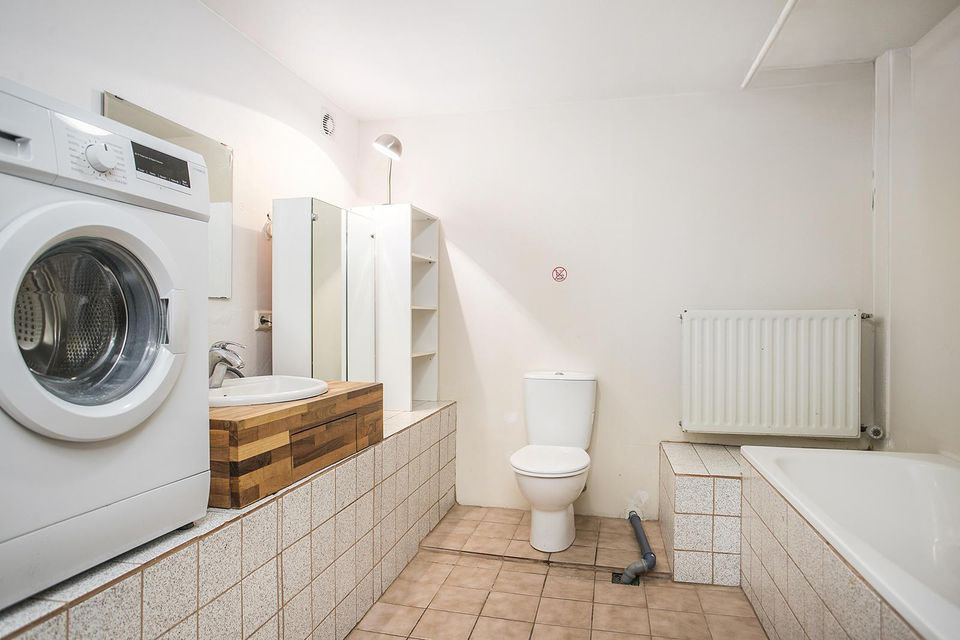
Watch radiator placement – A radiator too close to the WC results in sitting at an angle to avoid burning your knee – never a good experience.
Be cautious with countertop “salad bowl” basins. They almost always lead to splashing and mess, especially when reflected in a mirror.
Finally, check that the tap and spout are compatible with the basin. While guidelines often suggest the water should land in the centre, this usually means splashing onto the plug hole. I prefer it slightly off-centre toward the back—it reduces splash and gives you space to use the basin comfortably.
In Summary
Bathrooms succeed or fail on planning, not products. Most mistakes are invisible once the room is finished—but you’ll live with the consequences every day. Design carefully, understand the services, and think beyond how it looks to how it works. A beautiful bathroom that doesn’t function is just an expensive frustration.