Question: An International Interiors magazine asks itself the annual question – what five new interior trends she should look out for this year?
Stop.
Just stop.
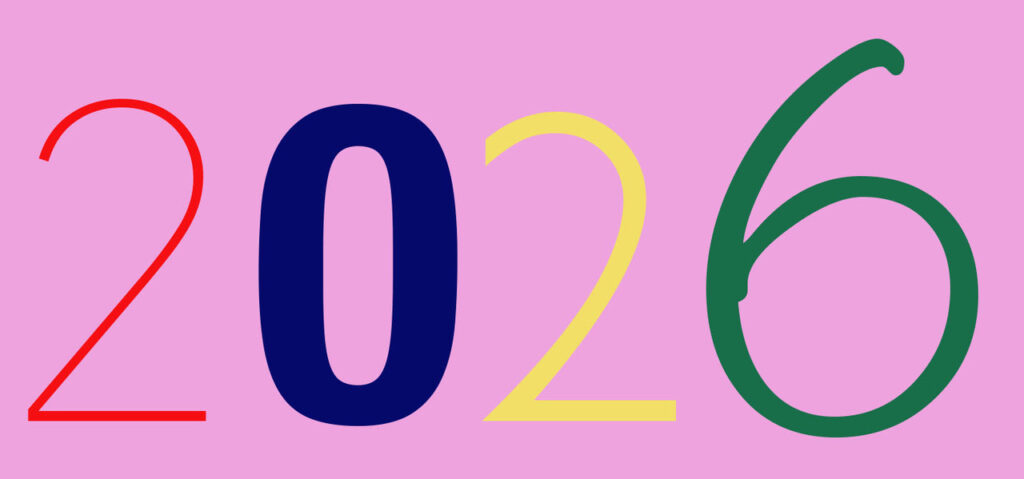
That banging you hear is my head hitting my desk – and it hurts. Not only because my desk is solid wood rather than hollow, cardboard-filled chipboard, but because the question assumes something I fundamentally disagree with: that your home needs to change because someone else says so. Most trend articles are marketing dressed up as advice. A nice Christmas box arrives from company X, a product appears in an article, and suddenly we’re told it’s in fashion and that we should buy it. Writers need to eat – I get that – but let’s not confuse advertising with truth. So instead of five new interior trends for 2026, here are five anti-trends. Principles worth adopting if you want a home that actually feels like yours—and still makes sense in a world with a future.
Anti-Trend 01 – New is not necessarily better
We’ve been conditioned to believe that new is always an improvement. It isn’t. New often means mass-produced, lower quality, and designed to be replaced. Furniture once made by skilled craftspeople in Europe is now churned out on distant production lines. Solid timber is swapped for honeycomb cardboard wrapped in a thin veneer. Durability gives way to disposability. And every so often, someone resurrects a truly terrible wallpaper pattern from the early 1980s – so bad it’s suddenly “good”—and we’re encouraged to cover our limerendered walls with plastic paper and glue. Newness is not a value. Quality is.
Anti-Trend 02 – Recognise the cycle
As a teenager in 1990s Britain, I remember the IKEA advert: “Chuck out your chintz.” It told an entire generation to get rid of the old and buy the new. Attitudes shifted, arguably for the better. In Iceland, garages quietly filled with everything except the car. Then came the Minimalist Movement. We realised we had too much. Strip it back. Get rid of anything that doesn’t spark joy. Scan your family photos onto a hard drive you’ll never open. Remove objects in the hope that peace, happiness, or productivity will arrive. And then – surprise – it didn’t quite work. Something felt missing. Let me look at another magazine article for inspiration! Oh look what’s in fashion now: Maximalism. Chintz is back baby! Fill your home with things you don’t need that look like a worse version of what your grandmother threw out 30 years ago. This isn’t evolution. It’s a loop. We are stuck in a cycle of consumption, and you can choose not to participate. The future of the world depends on more of us opting out.
Anti-Trend 03 – Start with what you have (and maybe remove things)
If something doesn’t feel right in your home, trust that feeling. Maybe it’s the picture that belonged to your grandmother, which you’ve never really liked but feel obliged to keep. Maybe the paint colour doesn’t work with the light and makes the sofa look faintly green. Maybe it’s that little wooden figure from ‘the’ design shop you bought ten years ago – the one everyone owns – that now just gathers dust, but was expensive so you can’t quite let it go. If you find yourself explaining to yourself why you still own something, that’s usually your answer. Start with what you have. Remove before you add. Not every problem needs a purchase to solve it.
Anti-Trend 04 – If it’s not broken, don’t fix it (and if it is)
You don’t need to change your home. You can if you want to—but you don’t have to. And change doesn’t have to mean consumption. Keep things because they’re useful or because they matter to you. Replace the broken plate in your kitchen, but don’t replace the entire set. Find one that matches. Or don’t. Embrace the fact that most of us already have mismatched plates. You chose your dinnerware once – what’s wrong with it now? Did it stop working, or did someone tell you it was no longer fashionable? Choose things that last. Things that age well. “Heirloom quality,” Is a phrase I’ve noticed popping up – the quiet test of whether your children will keep it or throw it out when you’re gone. It’s worth considering which objects will speak for you when you no longer can. Be yourself. Don’t be a sheep. Make intentions rather than impulse purchases. Don’t decide you need something, drive to a shop, and buy the least-worst option just because it’s on offer.
Anti-Trend 05 – Understand why we do this
You may disagree with me, and that’s fine – but disagreement needs reasoning. Is new better? Does clutter make you feel more at home? If so, own that. Your home should reflect you and the people you live with, not someone else’s idea of what’s current. We’re all trying to make our lives better. And yes—there’s a dopamine hit from buying. That’s real. But it’s a fallacy to believe we can spend our way to happiness, or that what we read about interiors is anything other than advertising. Even this article, with the best intentions, is a form of advertising for my business. The difference is that my business is built on my values. It doesn’t feel like selling; it feels like helping – earning a living, supporting my family, and trying, in some small way, to make the world better. For me, that’s enough.
Final Thought
The idea that we can consume our way to happiness is a convenient fiction – profitable, persuasive, and environmentally disastrous. Homes are not seasonal wardrobes. They are places where lives unfold. Buy less. Choose better. Keep what matters. And when someone tells you your home is out of fashion, remember: the most timeless thing you can own is conviction.